Showing posts with label Antarctic. Show all posts

Monday, June 27, 2016

Risky Antarctic Rescue Mission Completed Successfully

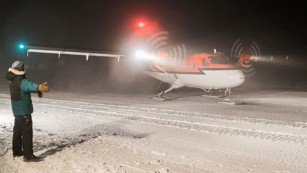
Before I left for Utah last week, one of the stories that we were watching closely was a daring and risky evacuation flight to the South Pole. At the time, all we knew was that a staff member at the Amundsen-Scott research facility had taken ill, and the situation was so desperate that two Twin Otter Aircraft has been scrambled from Kenn Borek Air in Canada to evacuate them. While it took some time to complete, that rescue operation did go off successfully, with everyone involved making it back safely.

Due to the fact that it is currently winter in the Southern Hemisphere, the flight was an incredibly risk one. Weather conditions are unpredictable and very dangerous in that part of the world this time of year, making it risky to come and go from the South Pole. Typically that means that anyone at the South Pole research station has to stay there until spring arrives in November. But in this case, the medical situation was so dire that it was deemed necessary to take the risk to bring out the patient.

That's exactly what happened last week, with the flight carrying not one, but two, South Pole staffers arrived back in Punta Arenas, Chile on Wednesday. That successful return followed several very long day, during which the pilots flew from Canada to South America, than crossed the Southern Ocean to reach the British Rothera Research Station, than continued on to the South Pole, and back again.

Two aircraft were required to complete the rescue with one making the full fight to the Pole, while the other stood by to lend a hand if needed. Fortunately, the entire mission came off without a significant hitch, and the two sick workers are now receiving medical attention. Their names and afflictions haven't been announced.

I'd love to hear more about this story and find out all the details behind it. Hopefully someone will do an in-depth article about what this adventure was like for the pilots. I'm sure there is quite a story to be told.
Wednesday, June 15, 2016

Evacuation Operation Underway in the Antarctic

The National Science Foundation has initiated an evacuation procedure from the Amundsen-Scott South Pole Research Station as one of the winter staff members there has taken ill. The nature of the medical emergency hasn't been divulged, but it is clear that it is serious enough for the NSF to call in help.

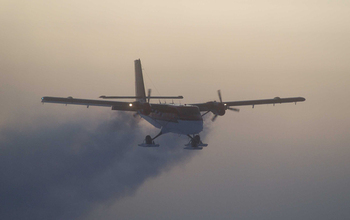
Canada's Kenn Borek Air has scrambled two Twin-Otter Aircraft, which are currently en route to South America before making the leap over to the Antarctic Continent. One of those planes will serve as a support aircraft should search and rescue operations become necessary, while the other will make a 1500 mile (2414 km) flight from the British Rothera Research Station to the South Pole.

The time table for this rescue operation will be heavily dependent on current weather conditions in the Antarctic, but it is believed that June 19 will be the earliest that plane can reach the South Pole. It is currently winter in the Southern Hemisphere, which makes for some incredibly inhospitable weather in Antarctica. Conditions can change very quickly, and it is not uncommon to have high winds and incredibly cold temperatures, sometimes falling to more than -100ºF/-73ºC. That could complicated an evacuation procedures over the next few days.

Because it is winter at the South Pole, the Amundsen-Scott station has a greatly reduced staff on hand to maintain the base. Typically those crew members are on duty there until November or so, when the regular crew returns to ramp up seasonal research operations. The winter staff usually knows that once they are in place there is usually no way for them to return home, so the nature of this medical evacuation must be fairly serious. Not only is the NSF risking the lives of the pilots performing the dangerous flight, but they're also risking the safety of their crew.

Hopefully everything will go off without a hitch in the next couple of days, and both the flight crew and the NSF staff member will be safely evacuated. It should be an interesting story to follow to say the least.