
With this video we travel to Morocco to get a good look at the people, culture, history, and landscapes that exist there. Located in North Africa, the country has been at the crossroads of that continent for centuries, and that lasting influence can be seen in many places found there. This short documentary film takes us to the bustling streets of its most famous cities, to the top of the High Atlas Mountains, to the Sahara Desert, and beyond. If you're in need for a travel escape today, this film will help satiate your wanderlust. Enjoy.
Morocco: Gateway to Africa from Freeze Tag Media on Vimeo.
Showing posts with label History. Show all posts
Showing posts with label History. Show all posts
Thursday, June 30, 2016
Monday, May 16, 2016
The 50 Greatest Adventure Books of All Time

As you would expect, the books on this list are incredibly diverse. Some are biographies, others are first-hand account memoirs, and some are complete works of fiction. The stories span the globe, taking us to just about every corner of the planet, from the frozen expanses of Poles, to tropical destinations closer to the equator. These books introduce us to some of the most interesting people to ever walk the Earth, and some that are completely made-up but are incredibly interesting none the less.
With such a long list, it would be impossible for me to ruin it completely. But some of the famous books that earned a nod include Melville's Moby Dick, Alfred Lansing's Endurance: Shackleton's Incredible Voyage, and The Mountain: My Time on Everest by Ed Viesturs. This is just a small taste of the great books that made this list, but no matter what your definition of adventure is, I think it is safe to say that there is something here for everyone.
On top of that, unless you're an incredibly fast reader, this list will take some time to get through completely. That would be an adventure in and of itself.
Friday, May 13, 2016
Nefertiti's Tomb Not Found in King Tut's Tomb After All

Fuel was added to the fire last fall when it was announced that ground penetrating radar has been used at the ancient site, and those scans had revealed that there indeed blank spaces hidden behind Tut's walls. This seemed to show that Reeve's theories were proving accurate, and that archaeologists were on the verge of making a major discovery.
But now it has been revealed that those scans may not have been accurate at all, and that there really isn't anything hidden in Tut's tomb as first thought. A second scan of the tomb, funded by National Geographic earlier this year, reportedly found no evidence of hidden chambers. Furthermore, there are Egyptologists who are claiming that the Egyptian government is suppressing the news as long as they can in order to maintain the illusion that a discovery may be imminent for as long as possible. The idea of finding Nefertiti's remains was seen as a major find, and could potentially be a boost to the country's flagging tourism sector.
Apparently, Nat Geo's second scanning operation is wrapped up in non-disclosure agreement, which means no one can officially confirm the story at this time. We'll have to wait for the Egyptian Ministry of Antiquities to make a statement before we know for sure, but those close to the story say that Egyptian officials are in a bit of a panic over the lack of a new discovery and are looking for alternate opinions and evidence before proceeding.
This story made headlines just a few months ago, but now seems to be completely without merit. That's a bit depressing considering how much hype surrounded the potential discovery. Hopefully we'll get the real story soon so we can either move ahead with learning more about what's in Tut's tomb, or put in behind us altogether.
Thursday, May 12, 2016
Did Canadian Teen Really Discover a Lost Mayan City?

The original story was that school boy William Gadoury noticed that Mayan cities were located on a map in the same shape as several constellations in the sky. Looking at old star maps, the then overlaid the constellations on terrestrial maps and noticed that there were locations where cities should have lined up with the stars, but there were no known settlements there. So, William broke out Google Earth and started pouring over the images in search of manmade structures, discovering what looked like the remnants of a prior civilization.
Naturally, the story has struck a chord with the public, many of whom have been fascinated by this narrative, while also wondering why no one else had noticed this placement of Mayan cities in the past. Well, it turns out that there may be some basic issues with the teenager's general premise, as National Geographic explains, and the structures that he spotted in the satellite images may not be as old as he suspects or possibly not even man-made at all.
Archaeologist Ivan Šprajc says that the square shape spotted on the map is really an abandoned field that probably isn't any more than 20 or 30 years old. He also says that other potential structures are most likely natural shapes, and include a clearing in the jungle, which probably doesn't have anything to do with a lost Mayan city.
As I mentioned in my original story yesterday, the only real way to confirm the existence of a lost city is to send a team of archaeologists out to examine the site. Considering the skepticism that is being raised from others in the field, it seems unlikely that that will happen soon. Of course, there are some who believe that trained archaeologists have also been caught with egg on their face by being upstaged by a teenager, so they have reason to cast doubt on his findings. Only time will tell at this point.
Wednesday, May 11, 2016
15-Year Old Canadian Boy Discovers Lost City in Mexico
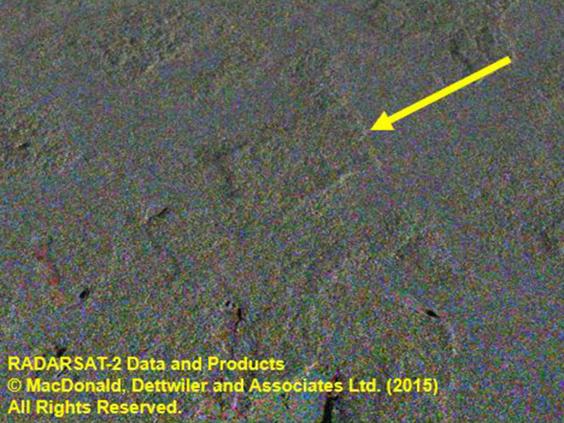
The actual existence of the lost city has yet to be confirmed on the ground, but other researchers are hailing the discovery as a significant one, and are giving William the credit. Experts say that it appears that there are quite a few man-made structures hidden under a thick canopy of vegetation, including buildings, a road, a town square, and possibly even a pyramid.
The teenager has named the city K'aak Chi, which means "Mouth of Fire," and he will present his findings at a scientific gathering in Brazil next year. Meanwhile, archaeologists are already applying his technique of matching star charts to maps in hopes of finding other lost cities as well.
This is another amazing story that reminds us that there are some things that are still hidden away from us, even in the 21st century. It's hard not to be impressed with this young man and his ingenuity. It's a wonder that no one else has discovered the connection between the stars and the Mayan cities before.
Tuesday, May 10, 2016
Remembering the 1996 Everest Tragedy
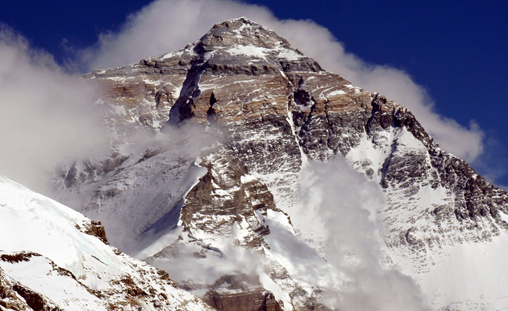
The story is a well known one by now, chronicled most famously in Jon Krakauer's Into Thin Air and more recently the big-budget Hollywood film Everest that was released last year. Teams heading to the summit that day included the Adventure Consultants led by Rob Hall and the Mountain Madness squad which was led by Scott Fischer. Both of those men perished in the attempt, as did several of their clients who were caught in massive storm that hit the mountain with an unexpected ferocity. Delays in reaching the summit also played into the tragedy that still haunts the mountain to this day.
Twenty years on, the events of that tragic day back in 1996 have been eclipsed by even darker days over the past two years, and yet somehow the wounds still remain fresh two decades after the event. The decisions made during that infamous summit push have been examined to death, with just about everyone remotely involved with Everest sharing their opinion of what could and should have been done. It is easy to be an armchair mountaineer however, and the days for weighing in on what happened are long past at this point.
Today, Everest is both a very different and very similar place to what it was back in 1996. There are still some guides, Sherpas, and support staff working there that were on the mountain when the tragedy occurred. Those men and women have helped to shape the modern climbing scene there, making it safer. Technology has helped in that area as well, improving communications and providing better weather forecasts that helps climbers avoid getting caught out in inclement weather.
The legacy of the 1996 climbing season on Everest is one of improved safety and cooperation amongst the teams there, which has resulted in greater success amongst those who come to climb. In some ways, that has made Everest a victim of its own success, leading to overcrowding and long summit lines at times.
But perhaps the most lasting impact of the 1996 season can be seen in the media that covered the tragedy than, and continues to watch Everest now. Most of the time it seems that the mainstream media only covers the mountain when something bad there. They know that accidents on Everest make headlines, while hundreds of successful summits are not as alluring. That's why we've seen so much about Everest in the media over the past few years, but this year we're likely to see very little. So far, 2016 has been a by-the-books season, with very few issues. There is nothing tragic to report, at least so far. And with the summit pushes now underway, you'll probably have to get your news about successes and failures from sources that are more invested in the mountaineering community, rather than those who are simply looking for sensational headlines.
The 1996 climbing season will always have an impact on the mountain, and those who lost their lives continue to serve as a reminder to take care when dealing with Mother Nature. I'm sure I won't be the only one thinking about those people today, even as the next generation of climbers go in search of their own Everest ambitions.
Wednesday, May 4, 2016
Video: How the First Car Came to Nepal
This video is certainly a blast from the past. It is a brief look at how the first car was delivered to Kathmandu in Nepal. The vehicle in question was a 1938 Mercedes that was gifted to King Truibhuvan by Adolf Hitler, and was delivered by hand in 1940. At the time, there were no roads in the country, and just a few in Kathmandu itself.
Subscribe to:
Posts (Atom)